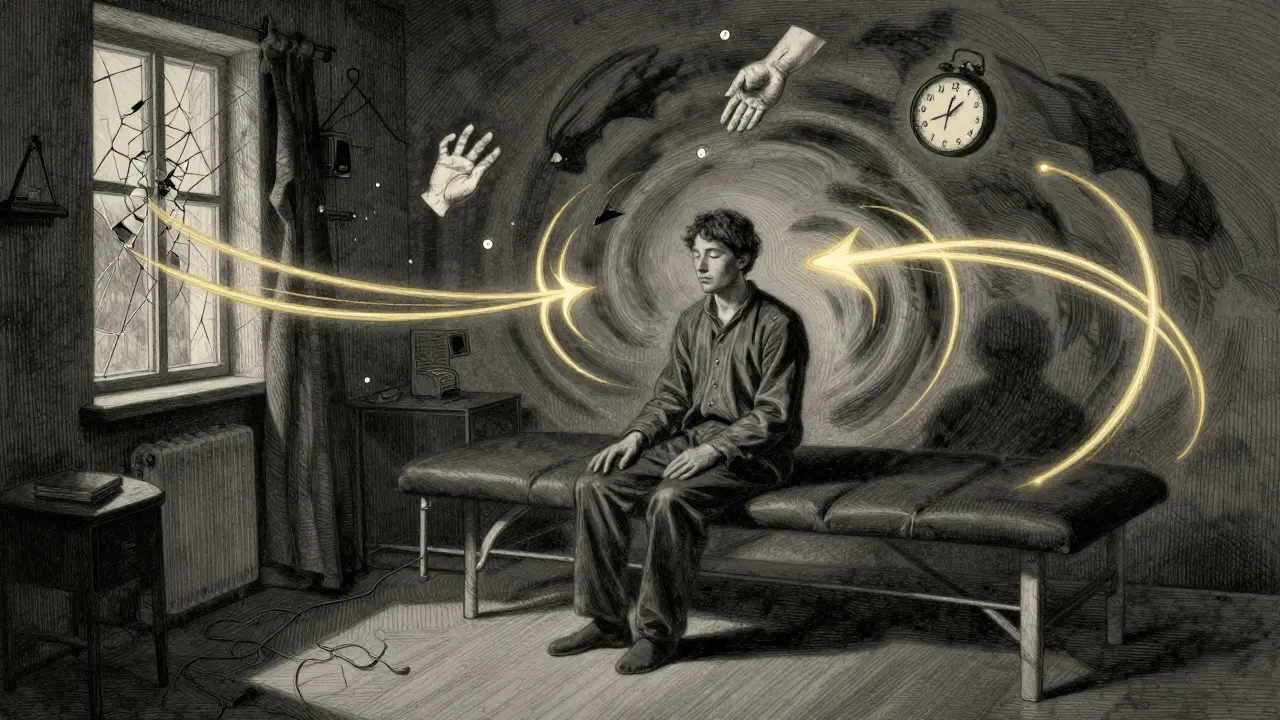
When someone asks how to choose the right therapy for trauma, they’re not just looking for a list of methods. They’re asking: Which one will actually work for me - and fast? Trauma isn’t something you can ignore. It doesn’t fade with time. It lives in your body, your dreams, your sudden panic attacks, your inability to trust. And in the Czech Republic, where mental health care still struggles with access and stigma, picking the wrong path can cost you months - or even years.
Let’s cut through the noise. There are three main therapies with solid evidence behind them: EMDR, Prolonged Exposure (PE), and Cognitive Behavioral Therapy (CBT). Each has strengths. Each has limits. And your choice shouldn’t be based on what’s trendy, but on what fits you.
EMDR: The Fast Track Through Trauma
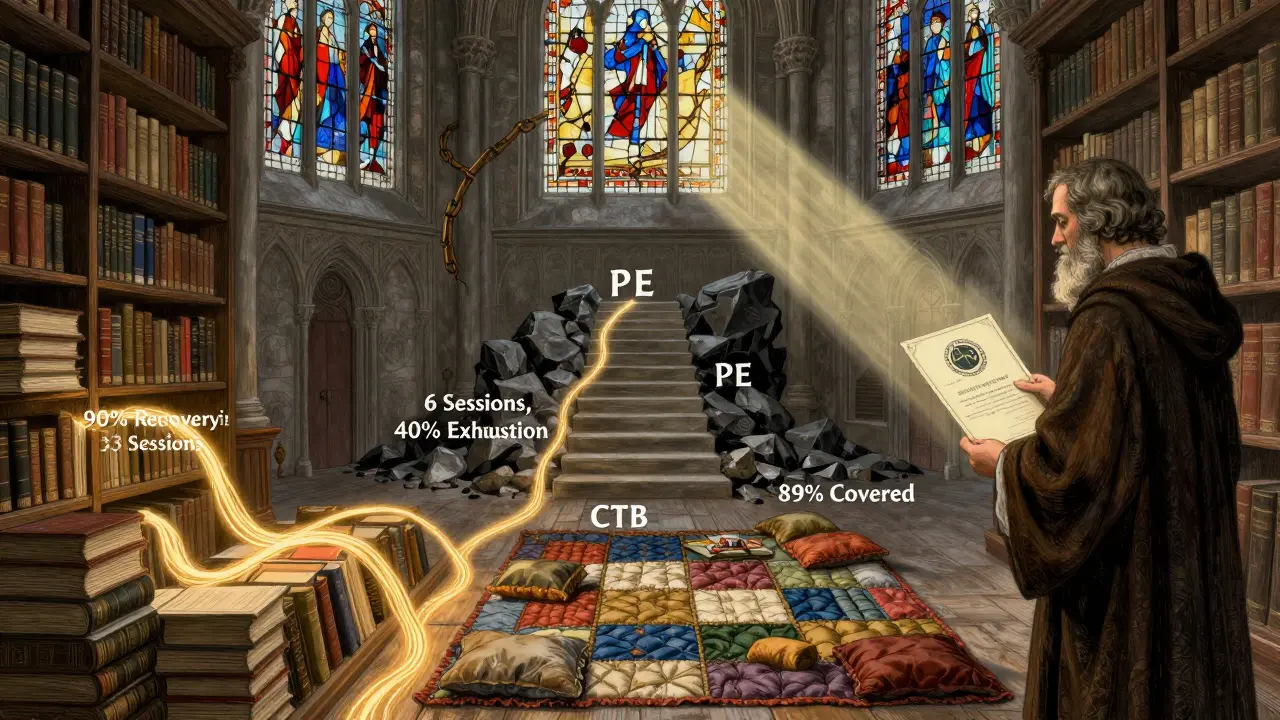
EMDR - Eye Movement Desensitization and Reprocessing - isn’t just another therapy. It’s the only one where clinical trials show 90% of trauma survivors no longer meet PTSD criteria after just three 90-minute sessions. That’s not a guess. That’s data from randomized studies accepted by the World Health Organization, NICE, and the American Psychiatric Association.
How does it work? You don’t need to relive every detail. Instead, you focus on a traumatic memory while following a therapist’s hand movements, or listening to alternating tones in headphones. This bilateral stimulation - visual, tactile, or auditory - seems to trigger a brain state similar to REM sleep. That’s when memories get reprocessed. The emotional charge drops. On average, by the fifth session, trauma memories lose about 70% of their intensity.
What makes EMDR different? Speed. While traditional CBT might take 12-16 sessions, EMDR often delivers results in 4-8. A 2019 study in the Journal of Traumatic Stress found only 22% of EMDR clients reported emotional exhaustion during treatment - compared to 38% in PE. That’s huge. If you’re already drained from flashbacks and nightmares, you can’t afford another exhausting therapy.
But here’s the catch: EMDR isn’t magic. It requires a certified therapist. In the Czech Republic, only 107 therapists were officially accredited by EMDR Europe as of January 2025 - just 3.2% of all licensed psychotherapists. And there’s a dark side: 22% of online ads for EMDR are from untrained providers. One woman on Facebook wrote: “After three sessions with an uncertified therapist, my depression got worse.” That’s not EMDR failing. That’s a bad practitioner.
Check the certificate. Look for the EMDR Europe registration number. Don’t trust a therapist who can’t show you proof. The Czech Institute for Traumatology lists all accredited professionals on its website. If they don’t have it, walk away.
Prolonged Exposure (PE): Face the Fear
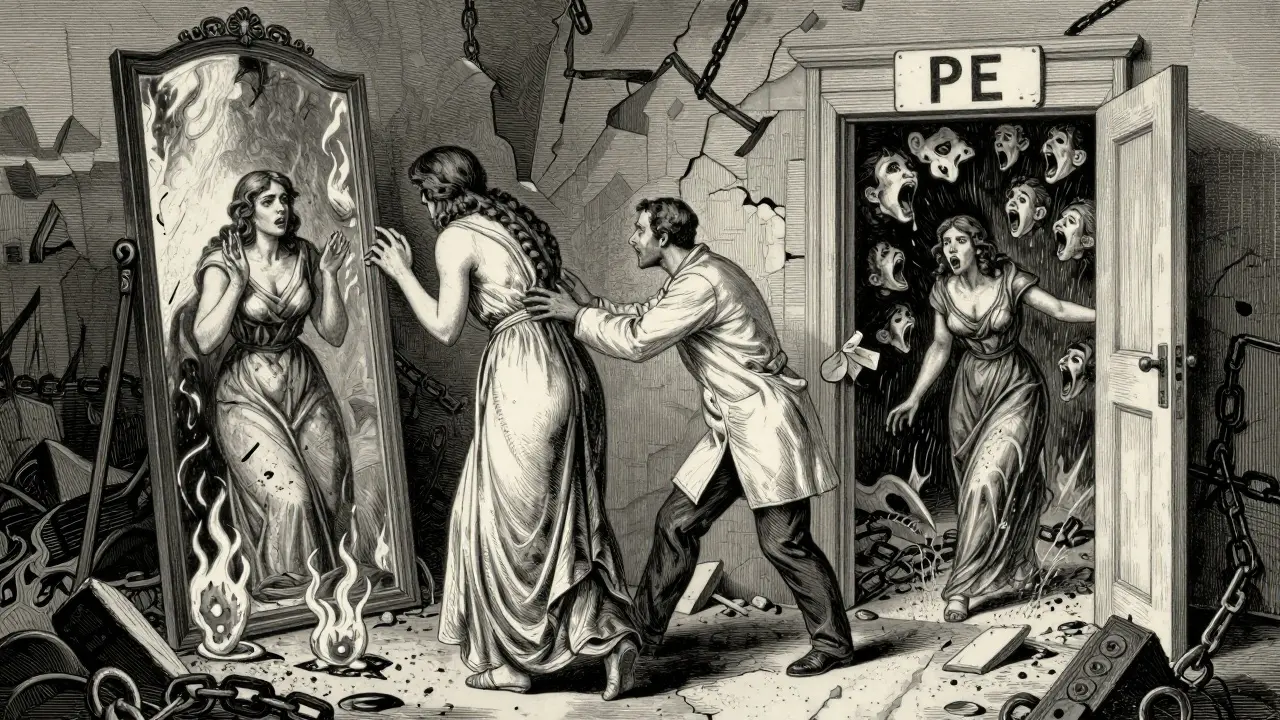
PE is the opposite of EMDR’s gentle approach. It’s direct. Aggressive. You’re asked to repeatedly recount your trauma out loud - then listen to recordings of it. Then you go back to places you’ve avoided since the event. It’s exposure therapy on steroids.
The science is clear: PE works. A 2018 study found 77% of people with multiple traumas no longer had PTSD after six 50-minute sessions. That’s close to EMDR’s success rate. But the cost? Emotional burnout. The same 2019 study showed nearly 4 in 10 PE clients felt overwhelmed during treatment. For someone already terrified of their own memories, this can feel like being shoved back into the fire.
PE also requires more time. While EMDR can deliver results in 6-8 sessions, PE typically needs 8-15. And it’s less flexible. If you have severe anxiety, dissociation, or a history of self-harm, PE might be too intense too soon. Some therapists in Prague now use PE only after building safety with EMDR or CBT first.
There’s another hurdle: insurance. In the Czech Republic, only 32% of EMDR sessions are covered by public health insurance. PE? Even less. Most therapists charge between 1,500 and 2,500 Kč per session. A full course can cost over 16,000 Kč. That’s why many wait - or give up.
Cognitive Behavioral Therapy (CBT): The Foundation
CBT is still the most common therapy in the Czech Republic - used in 68% of trauma cases. Why? Because it’s flexible, widely taught, and covered by insurance in 89% of cases. It works by changing how you think about your trauma. You learn to challenge thoughts like “It was my fault” or “I’ll never be safe again.”
But CBT doesn’t touch the body. It doesn’t reprocess the memory. It just helps you manage the symptoms. That’s fine - if your trauma is recent, or if you’re still in crisis. But if you’ve been stuck for years, with nightmares, panic attacks, or emotional numbness, CBT alone often isn’t enough. It’s like patching a leaky roof while the foundation is rotting.
Many therapists now combine CBT with EMDR. First, they use CBT to build coping skills. Then, they switch to EMDR to clear the core memory. This hybrid approach is becoming the gold standard in clinics like FN Motol and FN Brno.
What About Other Options?
There are other therapies - somatic experiencing, sensorimotor psychotherapy, internal family systems. But they lack the same level of evidence. The Czech Psychiatric Society only officially recommends EMDR and PE for PTSD. Others? They’re experimental. Interesting. But not yet proven.
One exception is the new TraumaCare app, launched in January 2025 by the National Trauma Center. For 299 Kč/month, it offers guided bilateral stimulation you can use at home. Twelve percent of EMDR clients now use it as a supplement. It’s not a replacement - but it helps between sessions.
Who Is EMDR For? Who Should Avoid It?
EMDR works best for:
- People with single-event trauma (car accidents, assaults, sudden loss)
- Those who struggle with talking about their trauma
- Anyone who wants fast relief from flashbacks and nightmares
- People who feel emotionally numb
EMDR is NOT for:
- People with severe vestibular disorders (vertigo, balance issues)
- Those with advanced vision impairments (if visual stimulation is used)
- People in active crisis - suicidal thoughts, substance abuse, or unstable living conditions
- Those who haven’t built basic emotional safety with a therapist
And yes - 15-20% of clients experience a temporary worsening of symptoms in the first few sessions. That’s normal. But only if your therapist is trained to handle it. A good EMDR therapist will pause, stabilize you, and adjust the pace. A bad one will push through. That’s why certification matters more than price.
How to Find a Real EMDR Therapist in the Czech Republic
Don’t Google “EMDR Praha.” You’ll get spam. Instead:
- Go to www.emdr.cz (Czech Institute for Traumatology)
- Check the list of accredited therapists - updated as of January 2025
- Call them. Ask: “Do you have an EMDR Europe certificate? Can I see the registration number?”
- Ask about their experience with trauma - not just PTSD, but complex trauma, childhood abuse, or combat
- Get a free 15-minute consultation. A good therapist will explain the process clearly - no jargon.
The National Trauma Center in Prague also offers a free guide: “Zpracování traumatu” (updated October 2024). Download it. Read it. It’s honest, practical, and written for people who’ve been through this.
The Bottom Line
EMDR is the fastest, most effective trauma therapy we have today. It’s backed by 127 new studies since 2013. The WHO calls it “strongly recommended.” In the Czech Republic, its use is growing - from 7% of trauma cases in 2020 to 21% today. By 2030, experts predict it will be the top choice.
But it’s not for everyone. If you’re emotionally fragile, have serious health issues, or can’t afford the cost, PE or CBT might be better starting points. And if you choose EMDR - insist on certification. Don’t let a cheap, untrained therapist make your trauma worse.
Healing isn’t about being brave. It’s about being smart. Choose the method that fits your body, your timeline, and your needs. And if you’re unsure - talk to someone who’s done this before. There are 107 certified therapists in the Czech Republic waiting to help. You just have to find them.