
When someone struggles with both ADHD and depression, it’s not just two problems stacked on top of each other. It’s a cycle - one makes the other worse, and neither gets better alone. In the Czech Republic, this dual diagnosis is more common than most people think. Nearly half of adults with ADHD also suffer from depression, and for many, it’s not a coincidence - it’s a direct consequence of years of feeling broken, misunderstood, or like they’re constantly falling behind.
Co je duální diagnóza ADHD a depresivní poruchy?
ADHD isn’t just about being distracted or fidgety. For many adults, it’s a lifelong battle with organization, self-worth, and emotional regulation. Over time, repeated failures - missed deadlines, forgotten promises, strained relationships - can wear a person down. That’s when depression creeps in. It’s not that they’re ‘just sad.’ It’s that their brain has been under constant stress, and the emotional toll becomes overwhelming.
Depression in this context isn’t random. It’s often a secondary reaction to the chaos of untreated ADHD. A person might feel worthless not because they’re flawed, but because they’ve been told - directly or indirectly - that they’re lazy, irresponsible, or incapable. The brain starts believing it. And then the cycle tightens: depression drains energy, making ADHD symptoms worse. Poor sleep, lack of motivation, and emotional numbness make it even harder to manage tasks, which leads to more guilt, more shame, and deeper depression.
This isn’t theoretical. Data from the Charles University in 2022 shows that 42.3% of adults with ADHD in the Czech Republic also meet the criteria for major depressive disorder. The symptoms overlap so much - low self-esteem, social withdrawal, fatigue, difficulty concentrating - that many are misdiagnosed. Some get antidepressants but never get help for the root cause. Others are told they’re just ‘overthinking’ - when what they really need is a whole new approach.
Proč tradiční léčba selhává?
For years, the system treated ADHD and depression as two separate issues. One doctor handled the stimulant medication. Another handled the antidepressants. A third offered talk therapy. But this fragmented approach didn’t work. Studies from Mezirolemi.cz in 2023 tracked 250 patients who received separate treatments. The result? 68% relapsed within a year.
Why? Because when you treat depression without addressing the ADHD, you’re putting a bandage on a broken bone. The person might feel less sad for a while, but they still can’t get out of bed in the morning because their brain won’t start. When you treat ADHD without touching the depression, you’re forcing someone to run a marathon with a broken leg. Stimulants might boost focus, but if the underlying hopelessness remains, they often stop taking them - or worse, turn to alcohol or drugs to cope.
And here’s the cruel twist: antidepressants (SSRIs) can sometimes make ADHD symptoms worse. In 22% of cases, they reduce the effectiveness of stimulants like methylphenidate. That’s why so many people end up stuck - cycling through medications, therapies, and failed attempts, feeling more lost than ever.
Kombinovaná psychoterapie: Co funguje?
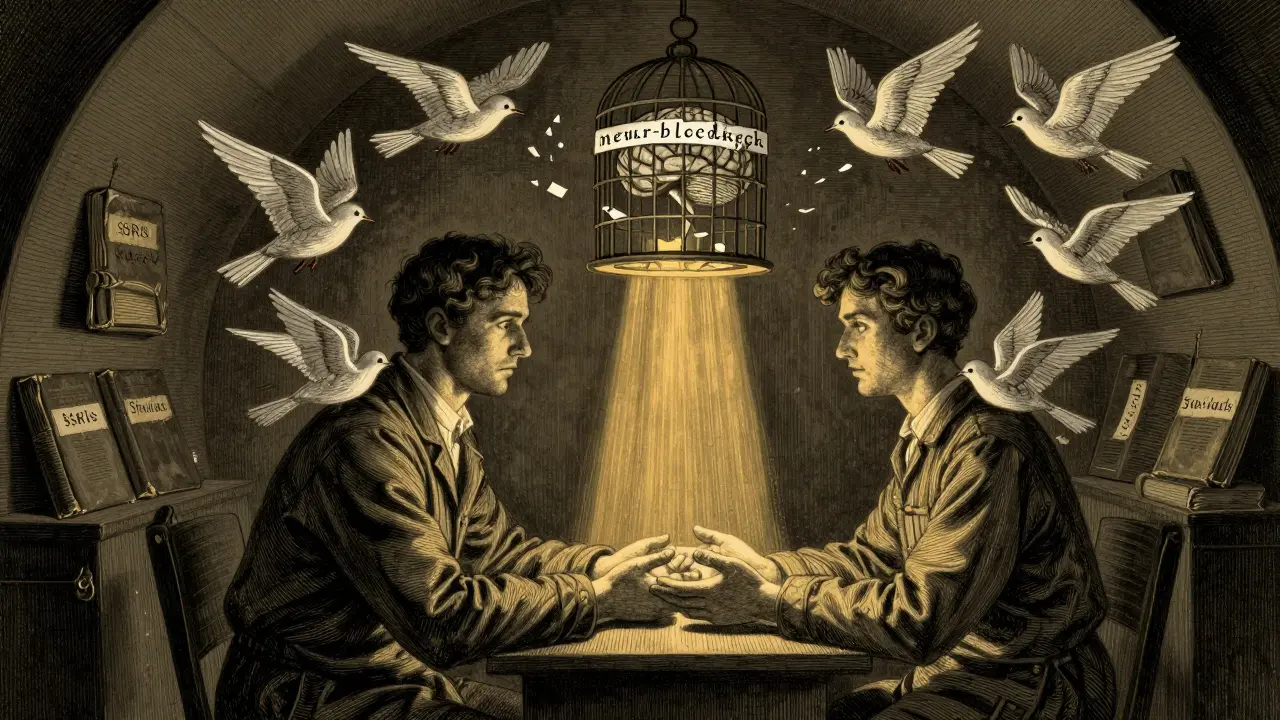
The breakthrough came when Czech clinicians stopped treating these as two disorders and started treating them as one. The new standard? Integrated cognitive behavioral therapy (KBT) - specifically designed for ADHD and depression together.
This isn’t your grandpa’s talk therapy. It’s structured, practical, and deeply personalized. At centers like CDR Akeso, the program lasts 12 days with 38 hours of therapy: 25 hours of KBT, 8 hours of psychoeducation, and 5 hours of movement-based activities. The goal? To rebuild the brain’s default settings - not just manage symptoms.
Here’s what it actually looks like in practice:
- Organizational rewiring: Instead of telling someone to ‘get organized,’ therapists teach time-blocking, digital reminders, and the ‘5-4-3-2-1’ grounding technique for anxiety spikes. These aren’t tips - they’re neural training tools.
- Emotional regulation: Patients learn to recognize the difference between ADHD-related overwhelm (‘I can’t do this’) and depressive collapse (‘I’m worthless’). The language matters. One is a system failure. The other is a belief.
- Medication coordination: A psychiatrist and adiktolog work side by side. Stimulants are titrated slowly, with careful monitoring of mood changes. Antidepressants are adjusted based on how the brain responds - not just by symptom checklist.
The results? After six months, 63% of patients show significant symptom reduction - compared to just 38% with separate treatments. At CDR Akeso, 68% of patients remain in remission after one year. That’s not luck. That’s science.
Co se děje v Česku? Léčebná realita
There are only 12 certified centers in the Czech Republic that offer this integrated treatment. And demand is exploding. The market grew from 127 million Kč in 2020 to 201 million Kč in 2023. By 2025, it’s expected to hit 310 million Kč.
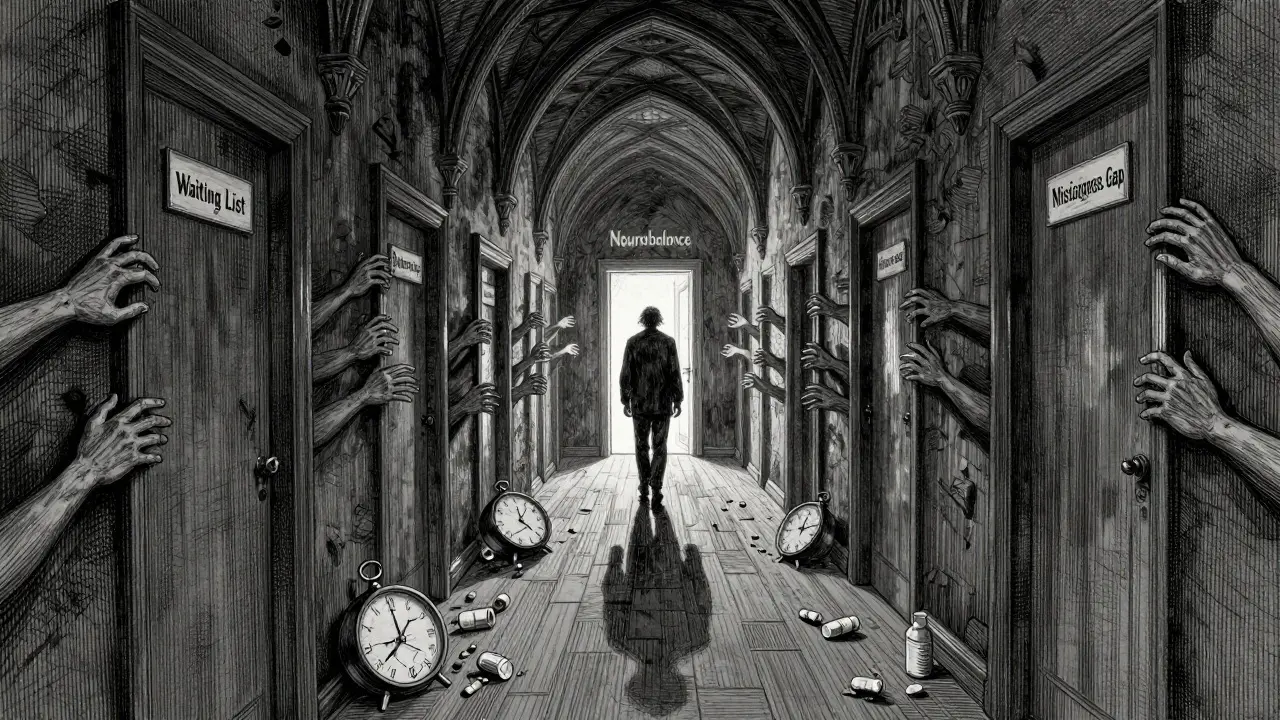
But access is still a nightmare. The average waiting time for a specialized program is 8.7 months. One woman, ‘Marek_T’ from dTest.cz, waited 11 months. During that time, she lost her job. She’s not alone.
Most centers charge 25,200 Kč for the 12-day program. Health insurance covers the therapy - but not accommodation. That’s a barrier for many. Only 63% of outpatient therapy costs are covered by the state. The rest? Out of pocket.
And then there’s the shortage of trained therapists. Only a handful of professionals are certified to handle dual diagnosis. Most psychologists were trained to treat depression or ADHD - not both together. That’s why so many patients get lost in the system.
Co se změnilo v roce 2024?
On January 1, 2024, the Czech Ministry of Health made a historic change: all patients with treatment-resistant depression must now be screened for ADHD. This wasn’t a suggestion. It became law.
It’s a small step - but a massive one. For the first time, the system acknowledges that depression isn’t always depression. Sometimes, it’s ADHD in disguise.
Two new national programs launched in 2023: ‘Neurobalance’ (combining KBT with neurofeedback) and ‘ADHD & Mood’ (focused on emotional regulation). And starting in January 2025, pilot programs at Motol Hospital will test genetic tests to predict how a patient will respond to medication. Personalized medicine is no longer science fiction - it’s here.
Co můžeš dělat teď?
If you or someone you know is struggling with both ADHD and depression, here’s what actually helps:
- Get screened properly. Ask for CAARS and BDI-II - the two validated tools used in Czech clinics. Don’t settle for a 10-minute chat.
- Find a specialist. Look for centers with ‘dual diagnosis’ in their description. CDR Akeso, Mezirolemi, and a few private clinics are leading the way.
- Start with therapy - not just meds. Medication alone increases relapse risk to 81%. Therapy teaches you how to live with your brain, not just numb it.
- Use simple tools. Digital reminders, time-blocking, and the 5-4-3-2-1 technique work. They’re not magic - but they’re backed by data. 87% of patients who use them regularly report improved daily function.
- Include family. Family education sessions reduce stress episodes by 44%. This isn’t just about you - it’s about your whole support system.
And if you’re waiting for a spot? Start with telemedicine. Since 2022, health insurance covers 10 online therapy sessions per year. That’s 10 chances to get help now - not in 11 months.
Co tě čeká v budoucnu?
The Czech Republic is leading Central Europe in dual diagnosis care. But the system is still under pressure. Experts estimate we need to double the number of certified therapists by 2026 to meet demand. The government has allocated 450 million Kč from 2024 to 2027 for mental health programs - a clear sign this isn’t a trend. It’s a necessity.
The future isn’t just better meds. It’s better understanding. It’s realizing that someone who forgets their keys, misses a meeting, and cries at night isn’t ‘weak.’ They’re fighting two invisible battles at once. And with the right help - integrated, consistent, and personalized - they don’t have to fight alone anymore.